When older adults think about moving to a life plan community, they often consider what they may need in the future. Will help be available if their health changes? Will they have access to services that make daily life easier? Will they be able to remain independent?
But there’s another question worth asking: Could moving to the right senior living community actually help you become healthier?
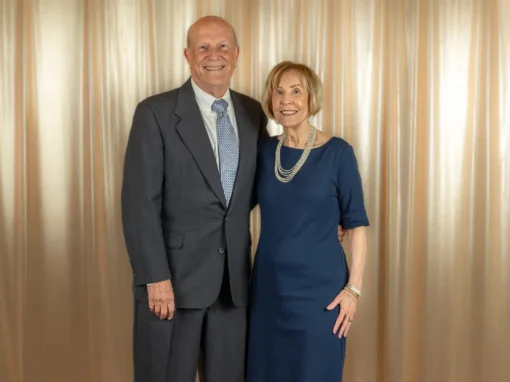
For Judy and Ed Zwick, residents of The Arlington of Naples located near Marco Island, the answer has been a resounding yes.
After a fall and a lengthy series of health challenges, Judy had become increasingly dependent on a walker and power scooter. Walking independently had become difficult, and her physical limitations had begun to affect how much she got out and interacted with others.
Today, Judy is stronger. She’s more confident. She’s using her power scooter less frequently, is taking independent steps again and enjoying activities with friends.
Her transformation illustrates something important about healthy aging: where you live can make a difference in how you live.
How Can the Right Senior Living Community Make Healthy Living Easier?
The right senior living community can make healthy habits easier by putting wellness resources, professional guidance and opportunities for movement close to home.
At The Arlington, residents have access to fitness assessments, group classes, personal training, educational workshops and wellness activities including Tai Chi and Qi Gong.
The focus extends beyond physical fitness to a more holistic approach to well-being. Mary Campbell, Director of Resident Services and Life Enrichment, recently earned the ICAA Foundation for Wellness Certification, a specialized training focused on wellness best practices and creating effective programs for older adults.
For Mary, the experience reinforced the importance of creating purposeful opportunities and weaving wellness throughout the resident experience.
What Happens When You Discover It’s Not Too Late to Become Stronger?
For Judy, the catalyst was a balance assessment.
After experiencing several falls in the past, Judy participated in a Zibrio balance test offered through The Arlington’s wellness programming. Her score indicated that she could be at greater risk of falling.
“I realized I had to do something about it,” Judy says.
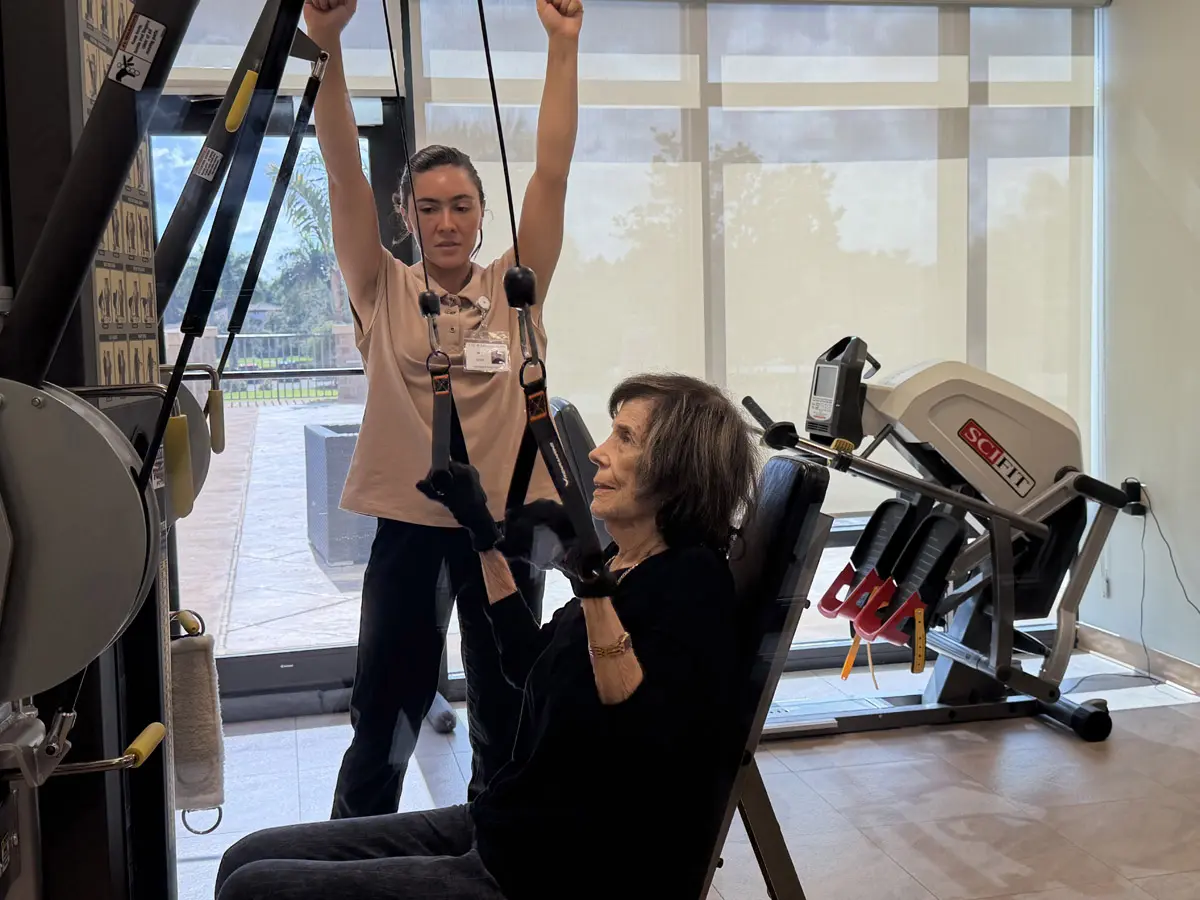
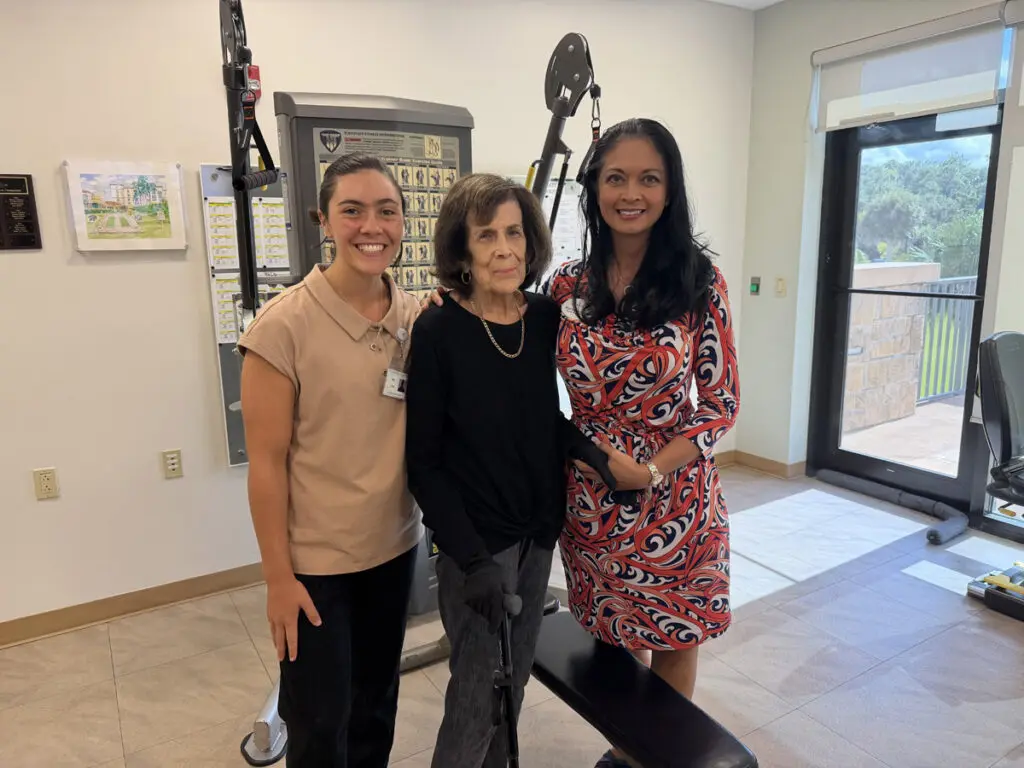
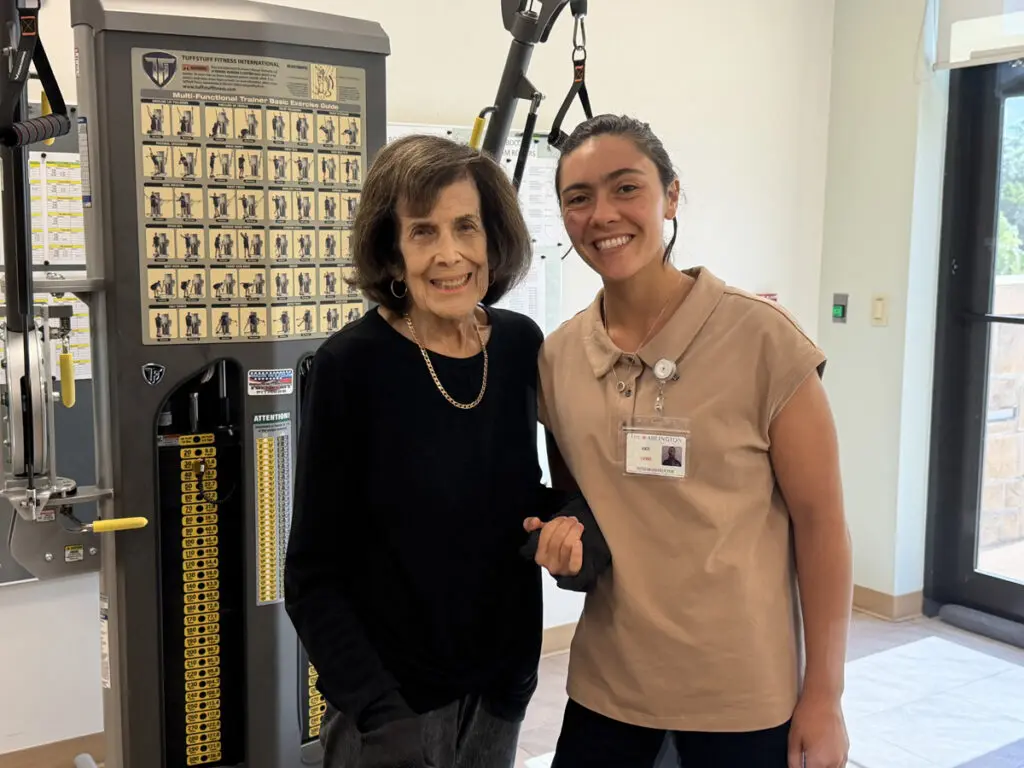
Around the same time, The Arlington welcomed Fitness Specialist Sky Goss, whose approach begins by understanding each resident’s individual abilities.
Sky conducts fitness assessments that evaluate balance, strength, flexibility, cardiovascular endurance and coordination. She then uses those results to identify areas where residents may benefit from additional work and to help guide their fitness plans.
That individualized approach was especially important for Judy.
After decades without a consistent fitness routine and years of physical limitations, jumping into a traditional exercise class wasn’t necessarily the right starting point. Instead, she began personal training with Sky twice a week – and she hasn’t missed a session.
“I look forward to it,” Judy says. “When I finish with the class, I feel better than when I arrived. I feel much more energized.”
Can Personalized Fitness Help Older Adults Regain Independence?
When Sky first assessed Judy, even some of the standard exercises used in a senior fitness assessment needed to be modified. Since their time together, Judy’s measurable increase in strength was encouraging, but Sky says an even more meaningful change has been Judy’s confidence.
Initially, Judy was afraid to get out of her chair and walk the short distance to the bench where she exercised. Now, Sky sometimes arrives for their training session to find Judy already walking around and preparing for the workout. That change represents more than physical progress, it represents confidence to move, participate and challenge herself.
Judy sees the difference, too. She still uses her power scooter for longer distances, but she’s getting out of it more often and taking independent steps with greater confidence.
 Does Better Physical Health Lead to a More Active, Social Life?
For Judy, and others like her, the answer is yes.
As Judy’s mobility became more limited, she acknowledges that she retreated socially. Today, she has developed new routines that get her out of the apartment, including regularly playing cards with friends. That hasn’t gone unnoticed by the community team. Mary shared, “there’s more than a physical change in Judy, she’s more outgoing, engaged and quicker to show her sense of humor.
At The Arlington, greater mobility also opens the door to a wide variety of ways to stay active and connected. The community offers a full calendar of activities, programs, classes and social opportunities every day! From fitness and educational programs to games, creative pursuits and social gatherings, there are plenty of reasons to get out, connect with neighbors and try something new. View a sample activities calendar here.
Judy’s experience is an example of how different dimensions of wellness can build upon one another. Greater strength can support mobility. Mobility can build confidence. And greater confidence can make it easier to get out, participate and connect with other people.
Why Does Having Support Around You Make Healthy Habits Easier to Maintain?
Not every older adult walks into a fitness class feeling confident.
Some worry they won’t be able to keep up. Others may be uncomfortable modifying exercises while everyone around them appears to be doing something differently. Still others may believe they’ve waited too long to make a meaningful difference in their health.
Sky designed The Arlington’s fitness offerings with those concerns in mind.
Classes are available at different levels, including seated options, so residents can find an environment where they feel comfortable participating. Personal training provides another alternative for people with specific limitations or those who simply prefer exercising individually.
Just as importantly, residents encourage one another.
Sky makes a point of recognizing people who are new to classes and encourages other residents to support them. That peer-to-peer motivation can help someone take the first step and keep coming back.
Judy isn’t the only resident who has experienced a difference.
Mary recalls a gentleman who had been struggling with walking after losing his wife. Although initially skeptical of Tai Chi, he tried a class and now participates every week.
His assessment of the results is straightforward: “I have better balance. I can walk better.”
 Could Senior Living Help You Become a Healthier Version of Yourself?
Judy and Ed didn’t move to The Arlington because they had stopped living active lives. They were healthy, traveling and enjoying themselves when they decided the time was right to make a move. Looking back, Ed says they have never regretted the decision.
Their experience challenges the idea that moving to a senior living community means giving something up.
The right community can instead create opportunities to gain something: easier access to wellness resources, professional guidance, motivation, social connection and encouragement from people who want to see you succeed.
For Judy, those resources are helping her reclaim something particularly valuable—her independence.
She knows there’s more work ahead, but just a few months into her fitness journey, she can already feel the difference.
“I feel like I’m getting to be a new woman,” she says.
And perhaps that’s one of the best reasons to think differently about senior living: it isn’t only about having support if your health changes. It can also be about having the support, opportunities and encouragement to keep becoming stronger, healthier and more engaged in the life you want to live.
If you’d like to learn more about the fitness program or other offerings at The Arlington of Naples, schedule your personalized visit today.